Short answer
A backyard putting green in Prosper mostly needs a stiff push broom and a little sand. As a general guide, a lightly used green wants brushing about once a month, leaves cleared weekly while the oaks are dropping, and thin spots topped up with matching sand infill. Standing water or a lifting edge is a job for an installer.
Synthetic putting green maintenance is lighter than most people expect, and that makes it easy to put off. Ignore a green and it tends to get slower and less fun to putt on, until one evening every ball seems to wander left of the cup. If you are still planning a green, our artificial putting green installation homepage is the place to start, and the care routine is worth thinking about before you settle on what to build.
Why does putting turf mat down, and how do you brush it?
Putting turf is built short and dense so a ball rolls over the tops of the fibers. One putting turf product sheet lists a finished pile height of three eighths of an inch, and other products run a little taller. Fibers that short tend to lean over where you stand and walk, and a flattened patch can change how a ball rolls across it, which may be why putts start to wander.
Brushing helps stand the fibers back up and spreads out the sand between them. The usual tool is a stiff bristle push broom, and it is best to skip wire bristles, which can be hard on short fibers. Sweep against the lean so the fibers come upright. As a general guide, once a month is plenty for a green that gets light use. If you putt several evenings a week, you may want to do the spots where you stand every couple of weeks and the whole surface monthly. If putts start to wander between brushings, brush sooner.
Why does the roll drift, and when should you add sand?
Under the fibers sits a layer of fine sand infill, which helps hold the turf down and affects how the surface plays. Over time that sand tends to move. Rain can push it toward low spots, feet can carry it off the edges, and a leaf blower aimed too hard can lift it. A green can end up thin in one area and heavy in another, and uneven sand usually means uneven speed.
Topping up is generally a job a homeowner can handle. Spread a thin layer of the same type of sand across the thin areas with a scoop or a drop spreader, brush it in until it settles below the fiber tips, then roll a few putts and see how it feels. A little at a time is the safer approach, since too much sand in one place can change the roll in a way that is hard to undo. Ask whoever built the green which sand it used, because grit size can affect how it packs.
How do leaves and shade affect a green?
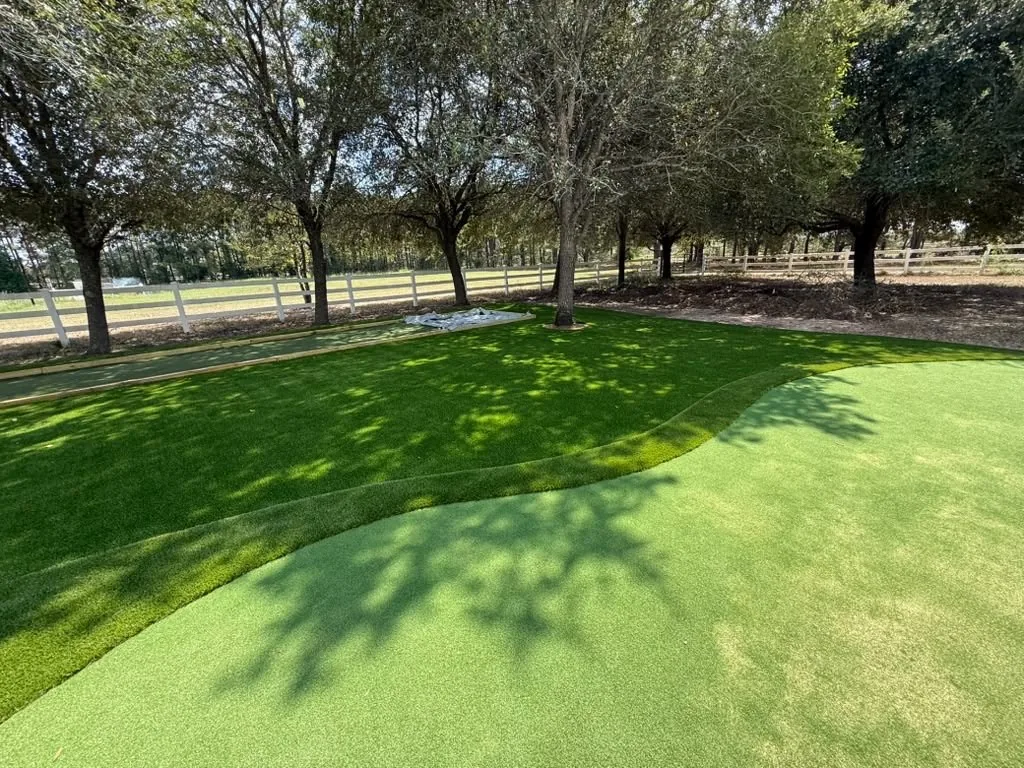
As the young trees in Prosper's newer neighborhoods fill in, a live oak or red oak over a green can drop leaves, acorns and pollen for weeks at a time. Leaves left on the surface hold moisture and can break down into a fine organic layer that clogs the sand. Blow or rake the green weekly during heavy leaf drop, which for a live oak is usually spring and for most other oaks is fall, and keep the blower on low so the sand stays put.
Shade has trade-offs. It can keep the surface cooler in July, and it can also slow drying after a storm. A surface that stays damp under tree cover for days may show mildew or a greenish film, especially where organic debris has built up. The usual fix is to clear the debris, rinse the area with a garden hose and let it dry. Early or late in the day is the simple choice for rinsing. The Town of Prosper's watering rules restrict watering from 10 a.m. to 6 p.m., and if you want to use a hand-held hose during those hours, it's worth asking the Town first. Water that sits on the green after rain is a different problem, and it usually points at the base, so ask an installer to take a look.
Cups, flags and edges
Cups collect sand, leaves and the occasional wasp. Scoop the cup out every few weeks and check that any drain hole is clear so it does not fill in a downpour. If a cup starts to rock, ask an installer to look at how it is set.
Walk the edges while you are at it. The seam between the putting surface and the fringe, and the line where the fringe meets the lawn or a bed, are common places for turf to lift. If an edge curls or you can slide a finger under it, leave it for an installer, since edge fixes often mean re-pinning or re-seaming and glue can make that harder.
What can you do yourself, and what belongs with an installer?
The homeowner list is short: brush, top up sand, clear debris, rinse, tend the cups and flags, and keep wheels and furniture legs off the surface. Anything underneath belongs with an installer. That means a low spot that holds water, a hump where the clay moved under the base, a shifted cup sleeve, an open seam, or a green that has gone slow everywhere and may need its infill redone. Our backyard putting green Prosper TX page explains how the base under a green is built, and a well-built base tends to keep that list shorter. If you are still at the pricing stage, our backyard putting green cost guide is the place to see what a green typically runs.
On lifespan, one Las Vegas turf contractor's guide, citing University of Florida researchers, puts most artificial turf at 10 to 20 years, with the high end reserved for premium material and consistent care. The same guide says well-installed putting greens can still last well past a decade with brushing and infill top-ups, and that frequent use shortens the standard range. We would expect a green in full sun that hosts putting contests every weekend to age faster than one by a patio that gets quiet evening use.
Frequently Asked Questions
What is the lifespan of a backyard putting green?
It varies with sun, use and upkeep. One turf contractor's guide says well-built putting greens can last well past a decade with brushing and infill top-ups, and that heavy use shortens the 10 to 20 years it gives for artificial turf generally. A green in full sun with heavy play will likely age faster.
How often should I brush an artificial putting green?
As a general guide, monthly for a green that gets light use, and every couple of weeks on the spots where you stand if you putt several evenings a week. A stiff bristle push broom is the usual tool, swept against the direction the fibers lean. Brushing also helps spread the sand more evenly.
Why does my putting green roll slower in one spot?
Often the sand infill has shifted, because rain and foot traffic can move it toward low areas and off the edges, and uneven sand tends to mean uneven speed. Flattened fibers can do it too. Try brushing first, then add a thin layer of matching sand where it looks thin and test again.
Can I pressure wash a synthetic putting green?
A garden hose is generally the safer tool. A pressure washer can lift sand infill and may fray short fibers if held too close. Rinse with a hand-held hose and shutoff nozzle to clear pollen and dust, keep it from running off, and ask your installer before trying anything stronger on a stain.
Ready to Get Started in Prosper?
Prosper Artificial Turf & Greens serves Prosper and the surrounding area. Describe your yard and we'll reply with a written quote.